<?xml version="1.0" encoding="utf-8"?><feed xmlns="http://www.w3.org/2005/Atom" ><generator uri="https://jekyllrb.com/" version="3.10.0">Jekyll</generator><link href="https://samreddy.work/feed.xml" rel="self" type="application/atom+xml" /><link href="https://samreddy.work/" rel="alternate" type="text/html" /><updated>2026-05-22T13:33:26+00:00</updated><id>https://samreddy.work/feed.xml</id><title type="html">Samarth Reddy | Creative Technologist</title><subtitle>Designer, researcher, and creative technologist based in Toronto, Canada. Deeply focused on designing for and with Artificial Intelligence.</subtitle><entry><title type="html">The Faces We Forget</title><link href="https://samreddy.work/artificial%20intelligence/computer%20vision/accessibility/2026/05/22/the-faces-we-forget.html" rel="alternate" type="text/html" title="The Faces We Forget" /><published>2026-05-22T00:00:00+00:00</published><updated>2026-05-22T00:00:00+00:00</updated><id>https://samreddy.work/artificial%20intelligence/computer%20vision/accessibility/2026/05/22/the-faces-we-forget</id><content type="html" xml:base="https://samreddy.work/artificial%20intelligence/computer%20vision/accessibility/2026/05/22/the-faces-we-forget.html"><![CDATA[<p>I kept thinking about how fragile recognition really is.</p>

<p>Not digital recognition. Human recognition.</p>

<p>The tiny moment before a greeting where your brain races to answer impossible questions: <em>Who is this? Have we met before? Why do they know my name?</em> For most people, that moment passes instantly. For others, it becomes a daily source of anxiety.</p>

<p>That’s what led me to build <strong>Memory Mirror</strong>.</p>

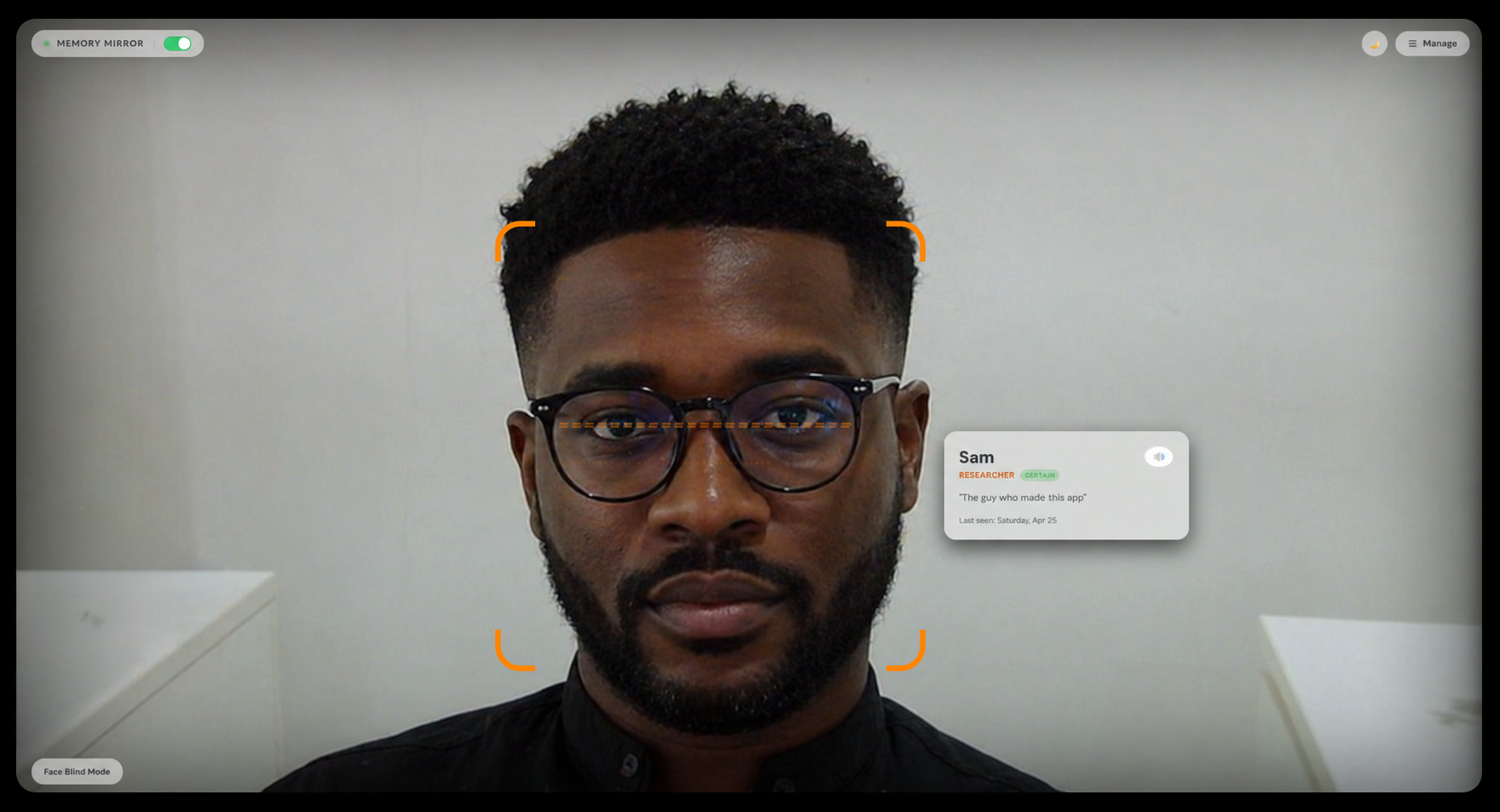
<p><img src="/_assets/images/pasted-image-20260522132328.png" alt="Pasted image 20260522132328.png" /></p>

<p>It started after reading about prosopagnosia, or face blindness, a condition that affects nearly 1 in 50 people. But the more I researched, the more I realized the problem stretches far beyond that label. People dealing with age-related memory decline, early dementia, cognitive fatigue, or even chronic stress often experience the same quiet friction. Faces lose context. Conversations begin with uncertainty instead of comfort.</p>

<p>And socially, the consequences compound slowly.</p>

<p>Missed greetings. Awkward pauses. Pretending to remember. Avoiding interaction altogether because recognition feels unreliable.</p>

<p>I didn’t want to build another intrusive AI assistant hovering over people’s lives like a fluorescent intern. I wanted something calmer. Something ambient.</p>

<p>So Memory Mirror became an experiment in using on-device computer vision as a kind of cognitive prosthetic for recognition.</p>

<p>The experience is intentionally simple. A laptop or tablet sits nearby with the webcam pointed toward the room. When a familiar face appears, a soft memory card fades in beside them showing their name, relationship, personal notes, and when they were last seen. The user glances at the screen, regains context, and returns to the conversation naturally.</p>

<p>No searching. No commands. No friction.</p>

<p>Almost like a second memory quietly sitting beside you.</p>

<p>What fascinated me most while building it was how invisible the technology needed to become. The goal was never to impress people with AI. The goal was to reduce social fear so effectively that the interface itself disappeared into the background.</p>

<p>In a strange way, Memory Mirror is less about facial recognition and more about preserving confidence. Helping someone stay present in a room instead of retreating from it.</p>

<p>You can explore the project here:<br />
<a href="https://samreddy.work/artificial-intelligence-and-extended-reality/memory-mirror?utm_source=chatgpt.com">Memory Mirror</a></p>]]></content><author><name></name></author><category term="Artificial Intelligence" /><category term="Computer Vision" /><category term="Accessibility" /><summary type="html"><![CDATA[I kept thinking about how fragile recognition really is.]]></summary><media:thumbnail xmlns:media="http://search.yahoo.com/mrss/" url="https://samreddy.work/_assets/images/cover_01_faces.png" /><media:content medium="image" url="https://samreddy.work/_assets/images/cover_01_faces.png" xmlns:media="http://search.yahoo.com/mrss/" /></entry><entry><title type="html">Why Did the Machine Describe It Better Than Me?</title><link href="https://samreddy.work/artificial%20intelligence/captioning/human%20cognition/2026/05/22/why-did-the-machine-describe-it-better-than-me.html" rel="alternate" type="text/html" title="Why Did the Machine Describe It Better Than Me?" /><published>2026-05-22T00:00:00+00:00</published><updated>2026-05-22T00:00:00+00:00</updated><id>https://samreddy.work/artificial%20intelligence/captioning/human%20cognition/2026/05/22/why-did-the-machine-describe-it-better-than-me</id><content type="html" xml:base="https://samreddy.work/artificial%20intelligence/captioning/human%20cognition/2026/05/22/why-did-the-machine-describe-it-better-than-me.html"><![CDATA[<p>It’s been a while since I built this LoRA evaluation project, but I still find myself thinking about one strange observation from it.</p>

<p><img src="/_assets/images/pasted-image-20260522165912.png" alt="Pasted image 20260522165912.png" /></p>

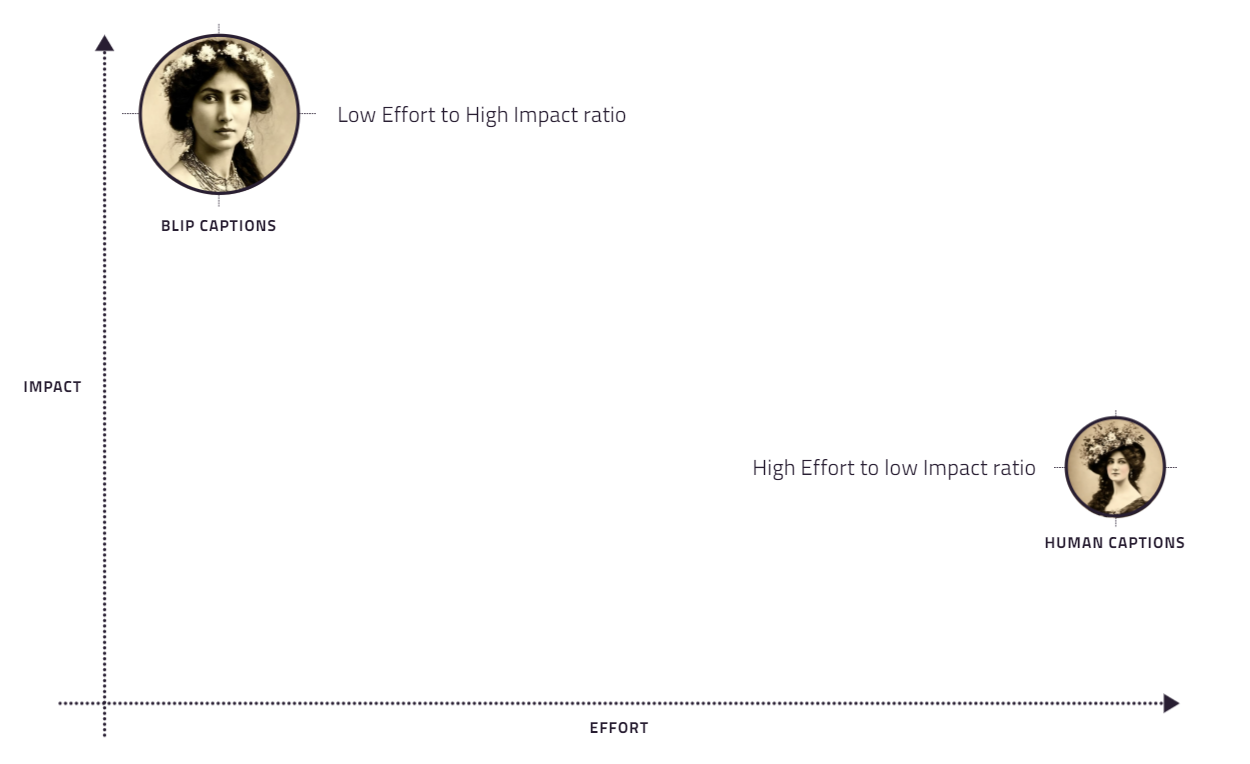
<p>The automated captions generated through BLIP consistently outperformed the prompts written manually by humans, including mine. At first, it felt purely technical. Better tagging. Better consistency. Better semantic coverage. The usual machine learning explanation buffet.</p>

<p>But the longer I sat with it, the less satisfied I became with that answer.</p>

<p>Because humans don’t describe images objectively.</p>

<p>We describe them through memory, exposure, emotion, culture, vocabulary, insecurity, obsession, and omission.</p>

<p>Two people can look at the same image and produce entirely different prompts because they are not just seeing the image. They are seeing themselves reflected inside it.</p>

<p>One person notices fashion details because they grew up around textiles. Another notices lighting because cinema shaped how they observe the world. Someone else completely ignores the background because their brain attaches emotionally to faces first. Even silence becomes part of prompting. Sometimes we know exactly what something looks like but don’t possess the vocabulary to name it.</p>

<p>That gap fascinates me.</p>

<p>A machine like BLIP doesn’t carry heartbreak, nostalgia, prejudice, aspiration, shame, taste, or aesthetic insecurity into the captioning process. Humans do. Constantly.</p>

<p>And then there’s another layer: emotion itself. Happiness sharpens attention differently than grief does. Trauma changes salience. Bias changes what feels “important” enough to mention. Prompting is not just a technical act. It’s cognitive archaeology.</p>

<p>Looking back, this project stopped being an evaluation of LoRA datasets and quietly became an evaluation of perception itself.</p>

<p>Not “humans write bad prompts, machines write good prompts.”</p>

<p>But rather:</p>

<blockquote>
  <p>Humans write prompts through the unstable lens of being human.</p>
</blockquote>

<p>And honestly, that complexity makes the whole thing far more beautiful to think about.</p>

<p>You can explore the project here:<br />
<a href="https://samreddy.work/artificial-intelligence-and-extended-reality/ai-lora-evaluation?utm_source=chatgpt.com">AI LoRA Evaluation</a></p>]]></content><author><name></name></author><category term="Artificial Intelligence" /><category term="Captioning" /><category term="Human Cognition" /><summary type="html"><![CDATA[It’s been a while since I built this LoRA evaluation project, but I still find myself thinking about one strange observation from it.]]></summary><media:thumbnail xmlns:media="http://search.yahoo.com/mrss/" url="https://samreddy.work/_assets/images/cover_02_captions.png" /><media:content medium="image" url="https://samreddy.work/_assets/images/cover_02_captions.png" xmlns:media="http://search.yahoo.com/mrss/" /></entry></feed>